
Fore & Pribble Criminal Defense Attorneys
Practice Areas (Quick Links)
Arrested for a DUI in Palm Beach County?
Start Building a Strong Defense
A DUI arrest triggers an immediate 10-day countdown to protect your driving privileges in Florida. At Fore & Pribble, we bring extensive, hands-on experience navigating complex Palm Beach County DUI prosecutions to protect your license and your liberty. We know exactly how to critically evaluate breath-alcohol testing data, identify flaws in field sobriety exercises, and expose unlawful traffic stops. Our experienced legal defense team handles every detail to ensure you make the right strategic moves for your future.
Fight your DUI now by scheduling a confidential consultation.
Contact Fore & Pribble 24/7 for a completely confidential case review.
Building a Strong DUI Defense
The strength of your defense may then depend on how well you were driving at the time of the traffic stop, whether you completed the field sobriety exercises and how well you performed, and your overall appearance and demeanor on the videos.
DUI convictions are either based on (1) a breath or blood reading of 0.08% or higher, or (2) evidence that “the person’s normal faculties are impaired.” Fla. Stat. Section 316.193(1).
Even if you qualify for a first offender DUI program (see more below), it may be in your best interest to challenge the evidence against you in court of taking a plea to reckless driving.
This may include the filing of pretrial motions and preparing for a trial in which the prosecutor is required to prove the case to a jury or judge.
If you refused to take a breath-alcohol test or give a urine sample, there may be no evidence of your breath/blood alcohol level. The jury is permitted to use your refusal as consciousness of guilt toward a conviction State v. Taylor, 648 So. 2d 701 (Fla. 1995), but there are often reasonable explanations for refusing the breath test. State v. Taylor, 648 So. 2d 701 (Fla. 1995). In my experience, refusal to take the breath test is not weighed heavily by a jury when other evidence tends to show the person was not impaired at the time of driving.
Defending Your DUI Case
The strength of your defense may then depend on how well you were driving at the time of the traffic stop, whether you completed the field sobriety exercises and how well you performed, and the way you looked and acted on the videos.
DUI convictions are either based on (1) a breath or blood reading of 0.08% or higher, or (2) evidence that “the person’s normal faculties are impaired.” Fla. Stat. Section 316.193(1).
The Officer’s Opinion
Without a breath or blood alcohol reading, the State is forced to build their case around the observations made by the officer. In refusal cases, the officer’s decision to arrest a person for DUI is based on the officer’s opinion. The jury gets to form their own opinion, based on the evidence.
Field sobriety exercises are difficult for the average person to perform, as most people are aware. Police have a series of “clues” they look for and document, while giving instructions in a purposefully confusing way. This compounds the natural nervousness of a person under investigation. The result is that people always perform less than perfectly, regardless of whether they are legally too impaired to drive.
DUI First Time Offenders
In Palm Beach County, first time DUI offenders are often treated more favorably than repeat offenders. Exceptions are for cases in which there was a high breath reading, the driver had a child in the car, and where there was a vehicle crash.
First time offenders could benefit from a reduction in charge from DUI to reckless driving, and sometimes avoid a driver’s license suspension.
Reckless driving is also a criminal misdemeanor charge, but it can have less long term effects on car insurance rates and will not count as a prior DUI offense in the future.
In Palm Beach County, first time DUI offenders are sometimes offered a reckless driving plea. Not every DUI arrest is eligible. For example, the DUI charge must involve
no vehicle crash
no minor children in the car
no animals in the car
no prior diversion programs offered to the person charged
a valid driver's license at the time of arrest
no felony charges or drug charges along with the DUI arrest (for example, possession of cocaine at the time of the DUI arrest).
The program is intended to be entered at the first court date or very soon thereafter.
If you have a good defense to DUI, you may choose not to accept a plea to reckless driving. Rather, you may want to fight your case so you do not have to plead guilty to any charges.
Contact us now to consult with an experienced DUI attorney in Palm Beach County to start evaluating your case to decide the best course of action.
DUI Diversion: Extra Conditions
The first-time offender DUI program is not without its difficulties, including alcohol monitoring like the ignition interlock device, which is not required in many first-time DUI cases.
The extra conditions are designed to provide treatment, accountability, and rehabilitation in exchange for the benefit of a better outcome for your case.
However, the ignition interlock can prove costly, embarrassing, and inconvenient. There are other options for alcohol monitoring, but this one is generally the most accurate, with few false positives for alcohol use.
The device costs around $50 to $150 to install, $50- 150 per month to maintain, and around $50 to $150 to have removed from your vehicle. A company my clients have used is RoadGuard Interlock.
The ignition interlock device is required for convictions where the driver's breath reading is above 0.15%--even for a first time DUI. This is nearly twice the legal limit, but I hear from clients who exceed this limit that their high breath reading surprised them.
The first time offender program also requires you to report to probation after entering your plea to reckless driving. This means probation fees of $50 per month, travel restrictions, random drug testing, and notifying your employer that you are on probation.
ation. The result is that people always perform less than perfectly, regardless of whether they are legally too impaired to drive.
DUI Conviction Cannot Be Expunged
In Florida, a DUI cannot be expunged if there is a finding of guilt. This is because an adjudication is mandatory for all DUIs. Fla. Stat. Section 316.656. After a DUI arrest, an expungement can only occur if the charge is not filed, dismissed, or a jury or judge renders a verdict of Not Guilty.
DUI convictions cannot be expunged because no adjudicated charges can be expunged in Florida. Fla. Stat. Section 943.0585(1)(d). DUI is the only misdemeanor charge that requires an adjudication in Florida.
Reckless driving diversion is a way around this required adjudication or full conviction. Since reckless driving does not require an adjudication, it can be sealed and later expunged by a Florida court. Click here to learn more about Florida’s sealing and expungement rules. .
Penalties for DUI in Florida
For DUIs without serious bodily injury or death:
1st DUI Offense
Misdemeanor conviction for DUI
Probation required for up to one year
Fine of $500 to $1000
Maximum jail sentence of 6 months (9 months maximum if breath is 0.15 or higher)
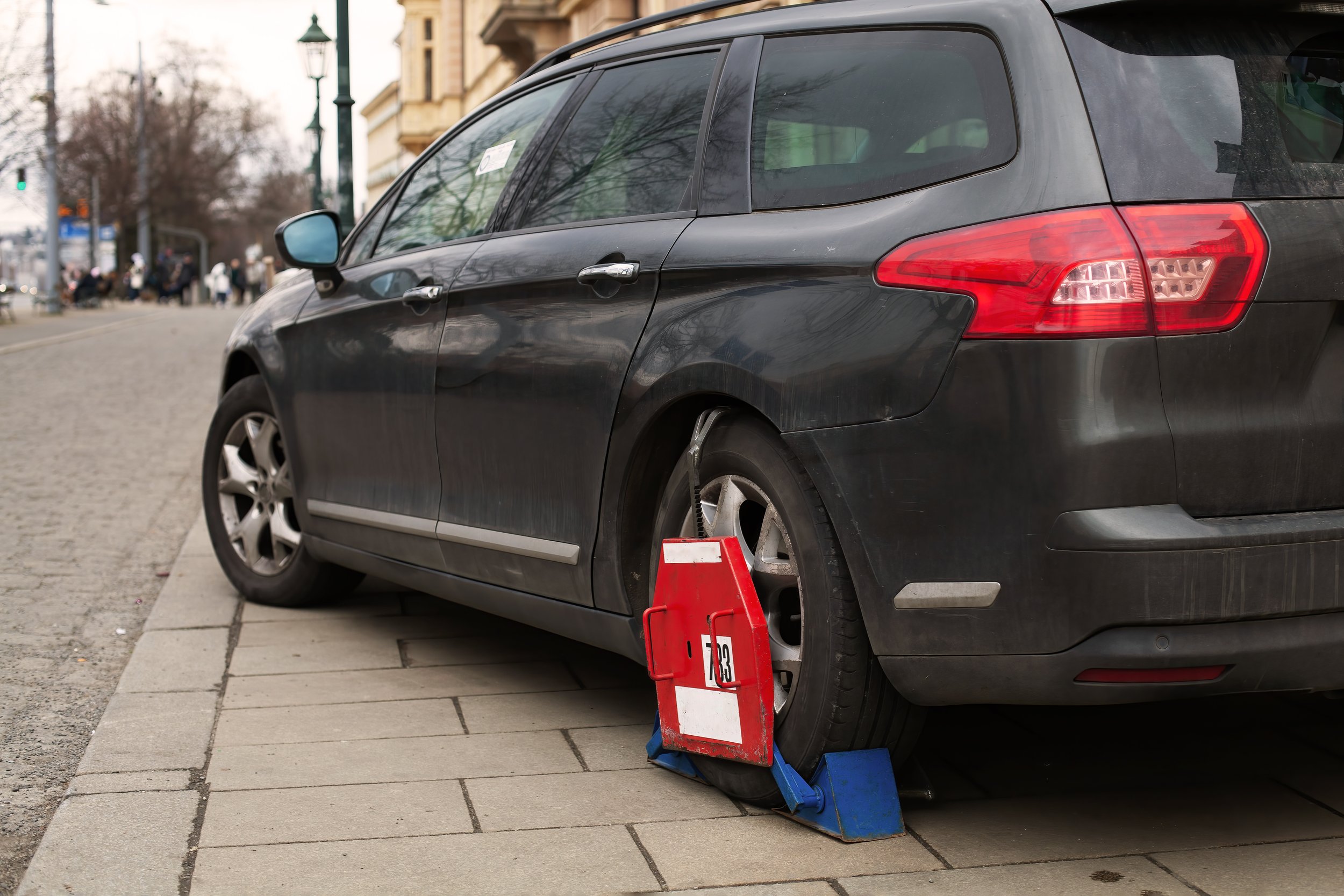
10 day vehicle immobilization (boot); cannot overlap with jail sentence but must overlap with driver’s license revocation (Fla. Stat. 316.193(6)(b)).
Driver license revoked for at least 6 months, up to one year (Fla. Stat. 322.28).
If blood or breath-alcohol level of .08 or higher, ignition interlock for at least 6 months
2nd DUI Offense
Jail
10 days minimum, if 2nd DUI is within 5 years of last DUI conviction
Maximum jail sentence of 9 month (or up to 12 months, for 0.15 or higher)
Misdemeanor conviction for DUI
Driver’s license revocation:
Driver's license revoked for at least 5 years (Fla. Stat. 322.28).
Fine of $1000 to $2000 ($2000 to $4000 if breath reading is 0.15 or higher)
30-day vehicle immobilization (boot)
(cannot overlap with jail sentence but must overlap with driver’s license revocation (Fla. Stat. 316.193(6)(b)).
Driver license revoked for a period determined by breath results and length of time between 1st and 2nd conviction
Ignition interlock device on vehicle for at least 1 year
3rd DUI Offense
Felony conviction for DUI, if it’s been less than 10 years since last DUI conviction
Maximum 5 years in prison
Ignition interlock device on vehicle for at least 2 years
Jail
30 days minimum, if 3rd DUI is within 10 years of last DUI conviction
90 day vehicle immobilization (boot)
Maximum $5,000 fine
Driver license revoked for 10 years
4th or Subsequent DUI Offense
Felony conviction for DUI is very likely
Maximum 5 years in prison
Fine of $2,000 to $5,000
Driver license revoked permanently
Refusal to take Breath-Alcohol Test is a Crime in Florida
Refusing the breath test more than once has been a crime in Florida for a long time. A lawyer’s general advice about whether to take the breath test in Florida changed in 2025.
In October of 2025, Florida amended its DUI statute. The refusal itself is now also a criminal charge, a misdemeanor underFlorida Statutes Section 316.1939. In other words, if you are arrested for DUI, and then you refuse the breath test, you will have at least two criminal charges.
The refusal charge is punishable by up to 60 days in jail for a first refusal, and up to one year in jail for a second or subsequent refusal.
Prosecutors typically seek harsh penalties for a second or subsequent refusal, often several months in jail (maximum is one year in jail). This punishment is almost always a lot more than if the person had just taken the breath-alcohol test that resulted in a high reading.
What have we seen so far? The first refusal misdemeanor is functioning as an additional charge added to the DUI, but usually without any additional harsh penalties like we usually saw with a second refusal charge. This is probably partly due to the fact that it is a lower level misdemeanor (60 days maximum in jail).
Other Consequences of Refusal
A person who refuses to submit to a breath-alcohol test in Florida faces a driver’s license suspension of at least one year, even if they win their DUI case.
If you refuse to take a breath test a second or subsequent time your driver's license will be suspended for 18 months.
These are in addition to the criminal penalties described in the section above.
Formal Review Hearing
Within 10 days of your DUI arrest, you must decide how to handle the option for an administrative hearing with the Florida Department of Highway Safety and Motor Vehicles to determine whether your license has been properly suspended due to arrest for DUI. If you have no DUI priors you can enroll in DUI school right away, waive the hearing, and apply for a business-purposes-only driver license in order to avoid having any time without a valid driver license pending the outcome of your DUI case. If you are ultimately convicted of DUI, you will have your license suspended at that time.
Consult with a lawyer at Fore & Pribble to help you decide whether electing to have the formal review hearing is in your best interest based on the facts of your case and your individual circumstances.
Your Direct Line to Defense
Exceptional communication is a hallmark of our practice. You are an integral part of this defense team. That means we keep you constantly updated, return your calls promptly, and ensure you are never left guessing about the status of your case.